Once a fool, now a wiser soul, No longer chasing shadows, no longer playing a role. The lessons learned from past mistakes, have helped me grow, and have helped me break free from being fake.
No more fooled by glossy lies, no more being blinded by deceitful eyes. I’ve opened my heart to truth and light, no longer lost in the dark of night.
The folly of youth is now left behind, in its place, the wisdom of a different kind. No longer led astray by foolish whims, no longer held back by doubts or sins.
Fool no more, I stand tall and strong, ready to face whatever may come along. With clarity and purpose in my sight, I walk a new path, shining bright.
Anxiety is the pesky little gremlin that likes to rear its ugly head at inconvenient times. We’ve all experienced it at some point – that feeling of impending doom, the racing heart, the sweaty palms, the overwhelming urge to curl up in a ball and never leave the safety of our duvet cocoon.
But what exactly is anxiety, you may ask? Well, my dear friend, anxiety is like that annoying friend who constantly whispers negative thoughts in your ear, trying to convince you that everything is going to go wrong. The little voice in your head tells you that you’re not good enough, that you’re going to fail, and that everyone is secretly judging you. In short, anxiety is a bully disguised as your thoughts.
So how do we go about identifying and understanding this sneaky little bugger? Well, first and foremost, it’s important to recognize the physical symptoms of anxiety. These can include a racing heart, shortness of breath, dizziness, nausea, and muscle tension. If you find yourself experiencing these symptoms regularly, chances are you’re dealing with anxiety.
Next, it’s crucial to pay attention to your thoughts and emotions. Are you constantly worrying about things that haven’t even happened yet? Do you find yourself catastrophizing every little hiccup in your day? Are you always on edge, waiting for the other shoe to drop? If so, congratulations, you’re probably dealing with anxiety.
Once you’ve identified your anxiety, the next step is to understand it. Anxiety is often a result of our primitive fight-or-flight response going into overdrive. Back in the caveman days, this response was pretty handy when chased by a saber-toothed tiger. But this response can be a tad overzealous in today’s modern world, where the most significant threat is running out of coffee.
Understanding that anxiety is a natural response to perceived threats can help normalize your experience. It’s also important to remember that anxiety is not a sign of weakness or failure – it’s simply your brain trying to protect you from harm, albeit in a slightly misguided way.
So next time you feel that familiar knot in your stomach or that all-encompassing sense of dread, take a deep breath and remind yourself that you are not alone in this battle against anxiety. And remember, with a bit of self-awareness and a lot of humor, you can outsmart that pesky gremlin and show it who’s boss. So go forth, my fellow anxiety warriors, and conquer that anxiety like the badass you indeed are!
It makes my heart skip a beat, your smile is so warm and sweet. At this very moment, time stands still, and my heart once again knows love’s sweet thrill.
With every word you spoke, my cold soul felt a gentle stroke. A dance of emotions, so pure and true, it was at that moment, that I knew.
Your laughter was like a melody, playing so perfectly in my heart, two souls in harmony, never to part. For the first time in the silence, I found peace, as my heart finally skips with ease.
That kiss made my heart skip a beat, a welcoming feeling oh so sweet. In your presence, I find my retreat, for in this love, my heart is complete.
Forgiving others for the way they treated you can be a tricky business.
It’s like trying to swallow a bitter pill coated in sugar – you know….
It may be good for you in the long run, but damn does it taste awful going down. We’ve all been there.
We’ve all had that one person (or maybe even a few people) who has treated us like a doormat, stomped all over our feelings, and left us feeling like a discarded piece of gum on the bottom of a shoe.
And let’s be honest, it sucks.
But here’s the thing – holding onto anger and resentment towards those who have wronged us is like drinking a shot of poison and expecting the other person to die.
It’s not a good look, trust me.
So why not take the high road and forgive them?
Now I know what you’re thinking – “But they don’t deserve my forgiveness! They hurt me, They betrayed me, They made me feel like crap!”
And you know what?
You’re absolutely right. They don’t deserve forgiveness. But you know who does?
You.
You deserve to be free from the weight of that anger and resentment. You deserve to move on and live without carrying that heavy baggage.
Now, I’m not saying forgiveness is easy.
It’s not.
It’s hard as hell.
It takes strength and courage to let go of those negative feelings and choose to forgive.
Stay with me.
You’re stronger than you think. You have the power to rise above the bullshit and choose to let go. When you do, a weight has been lifted off your shoulders. You can breathe more manageable, sleep better, and start moving on.
So how do you forgive someone who has treated you like crap?
Well, it’s not a one-size-fits-all kind of thing. It’s different for everyone. Maybe you need to write a letter to the person (even if you never actually send it) expressing your feelings and then burn it as a symbol of letting go.
Or maybe you need to talk to a therapist or counselor to help you work through your feelings.
Or maybe you need to take a deep breath, look in the mirror, and say out loud, “I forgive you.”
Whatever method works for you, please do it.
Trust me, you’ll thank yourself later.
And hey, forgiving someone doesn’t mean you have to forget what they did. It doesn’t mean you have to let them back into your life. It just means you’re choosing to release yourself from anger and resentment. You’re choosing to take back your power and move forward.
And that, my friend, is a beautiful thing.
So the next time someone treats you like crap, remember this – forgiveness is not for them. It’s for you.
It’s your saying, “I refuse to let your actions define me. I refuse to let you have power over me. I choose to let go and move on.” And let me tell you, that’s a powerful statement to make.
So go ahead, forgive those who have wronged you. It’s not easy, but it’s worth it. And hey, who knows? Maybe you’ll inspire others to do the same.
In my world full of chaos, noise, and strife, I lead with love as my guiding light. Through acts of kindness, compassion, and grace, I’ll create a world of beauty in every place.
With love as my beacon, I’ll find the way, to inspire and uplift others every day. Leading with a heart that’s pure and true, watch as love’s power transforms you.
I embrace forgiveness, I let go of hate, and I watch as love opens up every gate. Lead with love, in all that you do, And watch as the world smiles back at you.
So let love be your compass, your North Star above, let every action, every word, be guided by love. In the end, it’s love that will change the way, so lead with love and make the world a better place.
Setting and standing by your boundaries is like building a fortress around yourself, protecting your peace and sanity from unwanted intruders. It’s putting up a sign that says, “Do not disturb unless you come bearing snacks and good vibes.” Boundaries are your invisible force field, bouncer, and line in the sand that says, “This far, no further.”
Why can’t I seem to stick to them?
Setting boundaries can be tough. It’s like trying to build a brick wall with marshmallows – it’s a sticky situation, and not everyone is going to respect the boundaries you’ve put in place. But, that’s where standing by your boundaries comes in. It’s about holding your ground, standing tall, and saying, “No, you shall not pass.”
Think of it this way:
Your boundaries are like your personal space bubble. You wouldn’t let just anyone come into your bubble and start poking around, would you?
No way!
You’d be like, “Back off, buddy! This bubble is for VIPs only.”
So why should you let people trample all over your emotional and mental boundaries?
Trust me, I get it, easier said than done…
One important thing to remember is that setting boundaries is about knowing your worth and standing up for yourself. It’s about saying, “I deserve to be treated with respect, and if you can’t respect that, then you can see yourself out.”
There’s the door; don’t let it hit you on the way out.
It’s about putting yourself first because, let’s face it – if you don’t care for yourself, who will?
Standing by your boundaries is also about being firm but fair. It’s about being assertive without being aggressive. It’s about saying what you mean and meaning what you say.
It’s about being a badass who knows their worth and isn’t afraid to defend it.
So, don’t be afraid to push back the next time someone tries to push your boundaries.
Stand tall,
Stand strong,
Stand by your boundaries.
Because your boundaries protect you from the world’s chaos, they protect your peace from the crazies looking to destroy it, and nobody has time for that.
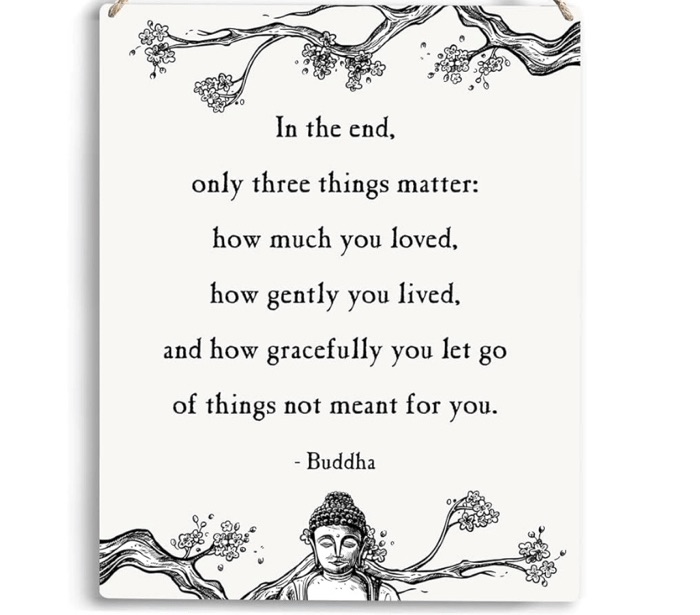
In life’s ever-changing flow, Sometimes we must learn to let go. Letting go gracefully, with quiet grace, embracing change, and finding a new space.
Like leaves drifting from a tree, we release what no longer serves us and set it free.
With hearts wide open, we surrender to the beauty of what’s yet to render.
Unburdened by the weight of yesterday, we step into the unknown, come what may, with faith and trust as the journey unfolds, we let go gracefully, our hearts consoled.
So let go of what holds you back, Embrace the future, and stay on track. We find a newfound sense of glee in the art of releasing gracefully.
Raising confident and resilient kids is no easy task, but it can be done with a little bit of humor and a lot of patience. As parents, we want to see our children grow up strong, self-assured individuals who can handle whatever life throws their way.
So, how exactly do we foster these qualities in our little ones?
First and foremost, it’s essential to let your kids know that it’s okay to fail. Failure is often a necessary stepping stone to any meaningful success. By encouraging your children to try new things, even if they might fail immediately, they will learn how to be resilient. Teach them that setbacks are just temporary roadblocks, not dead ends. And hey, if all else fails, remind them that at least they’re not the ones who invented the pet rock.
Next, instill in your children a sense of self-worth. Please help them to recognize their strengths and talents and encourage them to pursue their passions. Remind them they are unique and special, like a unicorn riding a skateboard. And hey, if they ever doubt themselves, remind them they’re the reason you have gray hair.
Another critical aspect of raising confident and resilient kids is teaching them adaptability. Life is full of unexpected twists and turns, so children must learn how to roll with the punches. Please encourage them to embrace change and view challenges as opportunities for growth. If that life lesson seems to be hard to understand, remind them that at least they’re not the ones who accidentally put salt in the sugar bowl.
Finally, don’t forget to lead by example. Show your children what it means to be confident and resilient by facing your challenges with grace and humor. Demonstrate that it’s okay to make mistakes and never too late to try again.
Raising confident and resilient kids is filled with ups and downs, laughter and tears. But with a bit of humor and a lot of love, we can help our children become the strong, self-assured individuals we know they can be.
And hey, if all else fails, remind yourself that at least you’re not the one who thought it was an excellent idea to let your kids have a pet tarantula.
Partners in crime, a bond so tight, Together we take on the darkest night. Side by side, through thick and thin, in each other’s presence, we will always win.
No challenge is too great, and no hurdle is too high, with you by my side, I can reach for the sky. Our laughs, our secrets, our dreams shared true, partners in crime, me and you.
Through ups and downs, we never will part, united in spirit and as one in heart. Together we will conquer, together we will soar, partners in crime forevermore.
Marriage is often described as a partnership filled with love, support, and understanding. However, for individuals who are healing from Post-Traumatic Stress Disorder (PTSD), being married can present unique challenges, inevitable setbacks, and growth opportunities.
Ultimately, marriage can be both a source of strength and a trigger for those struggling with PTSD.
As PTSD warriors know, living with PTSD is a daily battle, as individuals may experience flashbacks, nightmares, anxiety, and difficulty regulating their emotions due to the stress brought on by daily situations from being in a relationship. These symptoms can have a profound impact and, at times, disastrous effects on each party in their relationship. Due to this, they need to communicate openly with their partner about their struggles and needs. It is equally essential for partners to be open-minded and understand those needs and struggles.
One of the critical aspects of being married while healing from PTSD is the importance of establishing a safe and supportive environment within the relationship. Healing involves setting proper and healthy boundaries with your partner, creating a sense of predictability in life and the marriage, and providing each other with much-needed stability.
Trust plays an important role and will require continued individual commitment and work as a couple.
Each partner needs to be patient, understanding, and empathetic towards each other’s needs. Partners must be willing to make constant personal growth in helping each other develop coping strategies for managing a partner’s triggers.
Couples therapy can be an invaluable resource and the place to start for those who are married while healing from PTSD. A trained therapist can help couples navigate the challenges of living with PTSD, improve communication, and develop strategies for supporting each other through the healing process. Therapy can also provide a safe space for couples to explore their feelings, fears, and hopes for the future.
It is important for both partners to practice self-care while navigating the complexities of being married while healing from PTSD. This will take time and involve engaging in activities that promote relaxation to reduce stress, such as exercise, meditation, or mindfulness practices.
It is also crucial for both partners to prioritize their mental and emotional well-being, seeking support from mental health professionals when needed.
Being married while healing from PTSD can be a transformative experience for both partners. It can deepen their connection, strengthen their resilience, and foster greater empathy and understanding towards each other.
By working together, communicating openly, and seeking support when needed, couples can navigate the challenges of living with PTSD and build a stronger, more resilient relationship if both partners are genuinely committed to the process of healing.








 Roar louder than your demons